
Moving into a new home involves considerably more health planning than most people do in practice. The indoor environment of any residence shapes sleep quality, respiratory health, energy levels, and concentration in ways that only become apparent after weeks of living in the space. Whether you are moving into a newly constructed property from a developer like DreamProHomesLuxury, which takes livability and indoor environment seriously at the design stage, or a resale home you plan to refresh, the health quality of your indoor space deserves the same deliberate attention you would give any other aspect of the move.
Design choices that affect indoor health are not always obvious from a standard viewing. Concepts from modern home interiors, particularly courtyard layouts that encourage cross-ventilation and natural light distribution, exist partly because the built environment affects the people in it at a physiological level, not just an aesthetic one. The sections below cover the health factors most worth understanding before and immediately after you settle in.
Indoor Air Quality and What Your Home Is Breathing
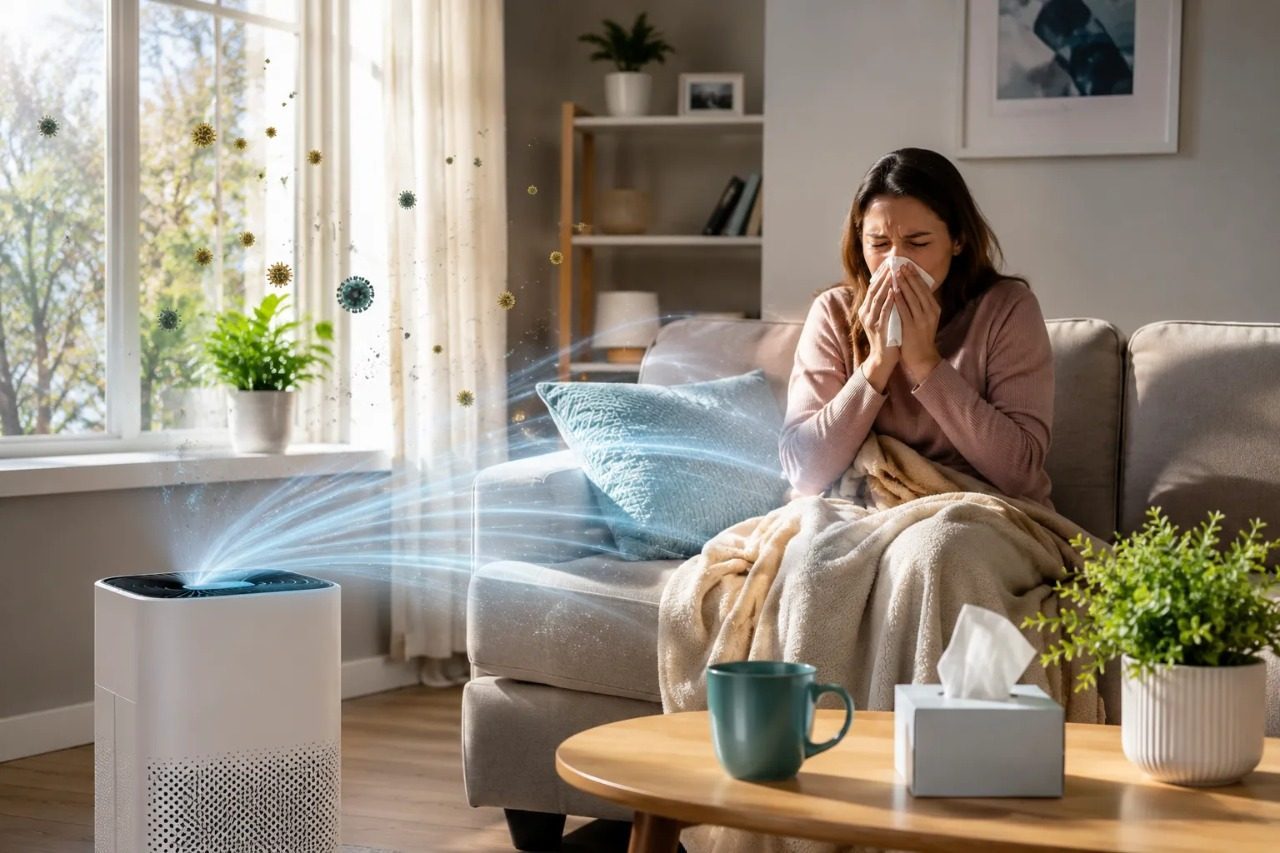
The air inside a home can contain pollutant concentrations two to five times higher than outdoor air, according to The Inside Story: A Guide to Indoor Air Quality from the U.S. Environmental Protection Agency. The sources include building materials off-gassing volatile organic compounds, combustion byproducts from gas stoves and heaters, dust mites in soft furnishings, and inadequate ventilation that allows all of these to accumulate. When you first enter a property, pay attention to air smell and movement. A chemical or musty odor that does not clear after several hours of open windows is worth investigating rather than assuming it will resolve on its own.
Open windows on opposite sides of any room and note whether air actually moves through the space. Exhaust fans in kitchens and bathrooms should draw air out of the building entirely, not just recirculate it within the room. Homes that rely entirely on sealed air conditioning systems with no passive ventilation option require a functioning filter and regular servicing schedule from the day you move in; otherwise indoor air quality deteriorates steadily. An inexpensive CO2 monitor placed in a frequently occupied room shows you whether air is cycling adequately and when it needs intervention.
Mold and Moisture: The Hidden Problem in Most Homes
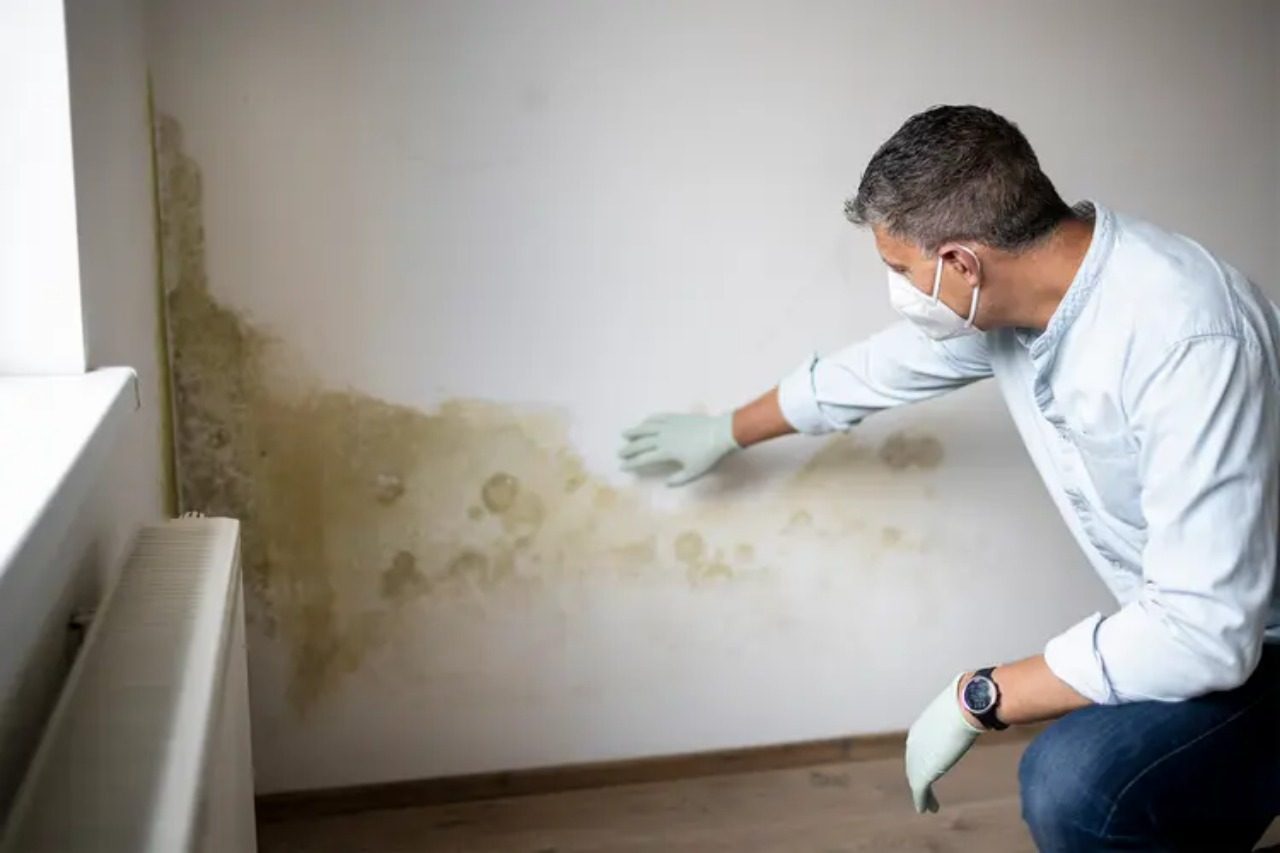
Moisture problems are the most common concealed health hazard in residential properties, and they are frequently well established before any visible signs appear inside the living areas. The Centers for Disease Control and Prevention notes on its mold and indoor health page that exposure to damp environments causes respiratory irritation, wheezing, sore throat, and burning eyes, with more serious effects in people who have asthma or weakened immune systems. The spores that cause these effects travel through air and are impossible to eliminate once an active moisture source remains.
When you move into any property, run all taps to full pressure in every bathroom and look beneath every sink cabinet for evidence of slow leaks. Water staining on ceilings near light fixtures, soft patches on walls near windows, and grout lines that have turned dark grey or black in bathrooms are signs that moisture has already found its way into places it should not be. Check that silicone sealing is intact around baths and showers, as broken seals allow water to enter wall cavities quietly over months. If you detect a musty smell in a room that does not disperse after a full day of ventilation, treat it as an active problem rather than a temporary one.
Natural Light and Its Direct Effect on How You Feel

How much natural sunlight reaches the rooms where you spend the most time has measurable effects on sleep quality, mood, and immune function, and these effects accumulate over months rather than becoming obvious in a single day. The circadian rhythm that regulates the body’s sleep-wake cycle depends on regular exposure to natural light in the morning and early afternoon. Homes with north-facing main rooms in the northern hemisphere, or south-facing rooms in the southern hemisphere, receive very limited direct sunlight across the year and can produce subtle but persistent health effects that many people attribute to stress or diet rather than their environment.
Before deciding how to arrange a new home, spend time in each room at different hours of the day and note which spaces receive direct sun and for how long. A bedroom that gets good morning light supports easier waking. A kitchen or main living space that is dark for most of the day creates conditions for persistent low energy. If the main rooms face an unfavorable direction, full-spectrum lighting is a practical partial solution, and it is worth installing before you move furniture in rather than trying to retrofit it later when the space is full.
Volatile Organic Compounds from New Finishes and Materials
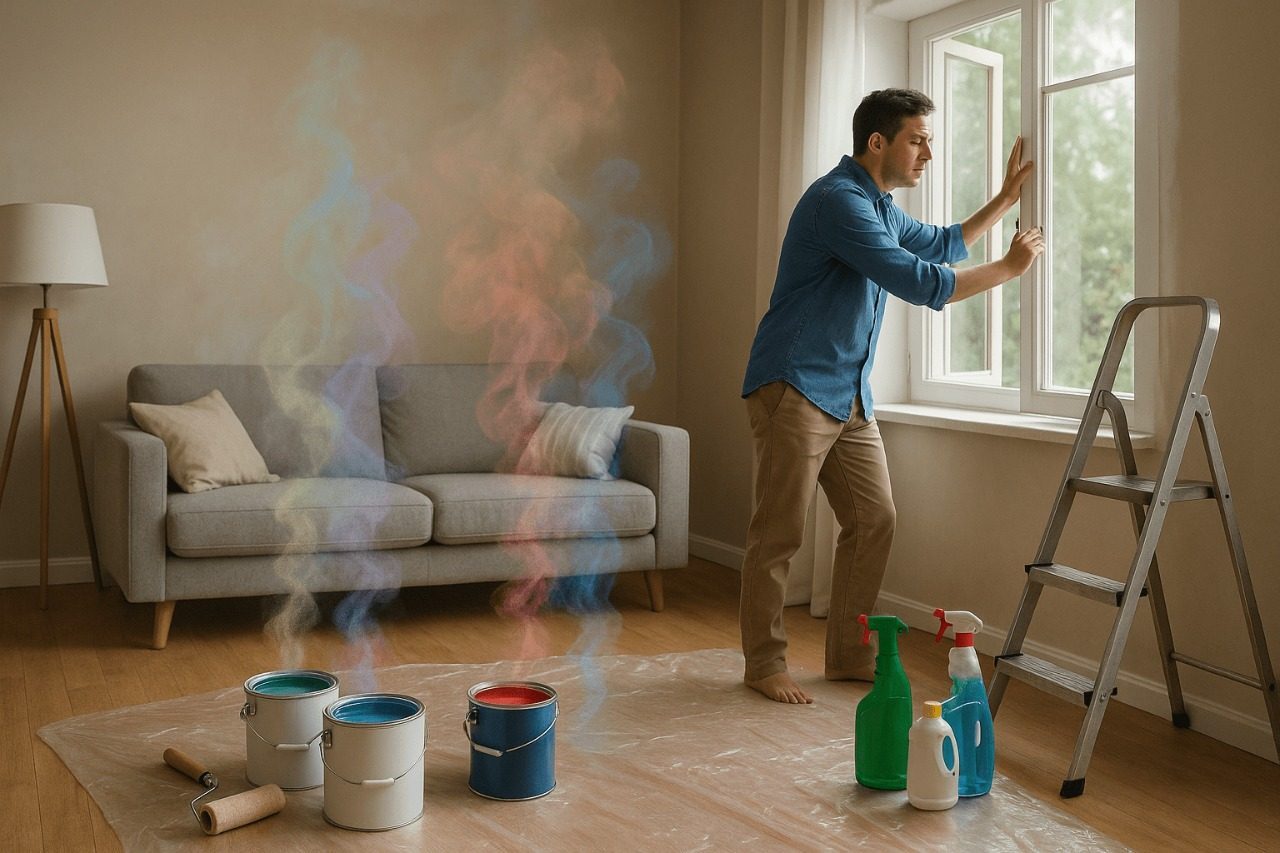
Newly renovated or recently built homes can present a specific health issue that older properties typically do not: concentrated off-gassing from synthetic building materials and finishes. Composite wood products including particleboard, MDF cabinetry, and laminate flooring release formaldehyde, a known respiratory irritant, for months or years after installation. Solvent-based paints release VOCs most intensely in the first weeks after application. Adhesives used to install carpet and tile contribute additional compounds. In a tightly sealed home with good double glazing and minimal passive ventilation, concentrations can remain elevated long after you would expect them to have dispersed.
When you first get access to a property, leave windows open for several days before moving in if possible. In a newly fitted kitchen or bathroom, keep windows open continuously for the first weeks and ventilate these rooms after any cooking that uses high heat or steam. Ask for documentation of the products used if cabinetry or flooring was installed recently. Materials certified under low-emission standards, such as GREENGUARD or California Air Resources Board Phase 2, produce meaningfully lower VOC concentrations. An air purifier with activated carbon filtration removes volatile compounds more effectively than HEPA filtration alone and is a practical investment for a bedroom with new finishes you cannot verify.
Practical Steps for the First Week in Any New Home
The days immediately after getting the keys, before furniture fills the space, are the most practical window for addressing a home’s health baseline. Start by ventilating every room for as long as possible before you move belongings in. Run the heating or cooling system through at least one full cycle and replace any air filters before spending extended time indoors. If the property has been unoccupied for more than a few weeks, run all taps for a minute to flush stagnant water from the pipes before using them for drinking or cooking.
Install a carbon monoxide detector on every floor before your first night in the property. Carbon monoxide has no smell, and its symptoms, including headache, fatigue, and nausea, are easy to attribute to the stress of moving rather than a gas leak. If you are in an area served by older water infrastructure, a water quality test kit from most hardware stores takes under an hour and identifies the most common issues including lead, bacteria, and nitrates. Setting up an air quality monitor in the bedroom on the first night gives you real data from the start, rather than having to guess at what has been affecting you weeks into a new living situation.