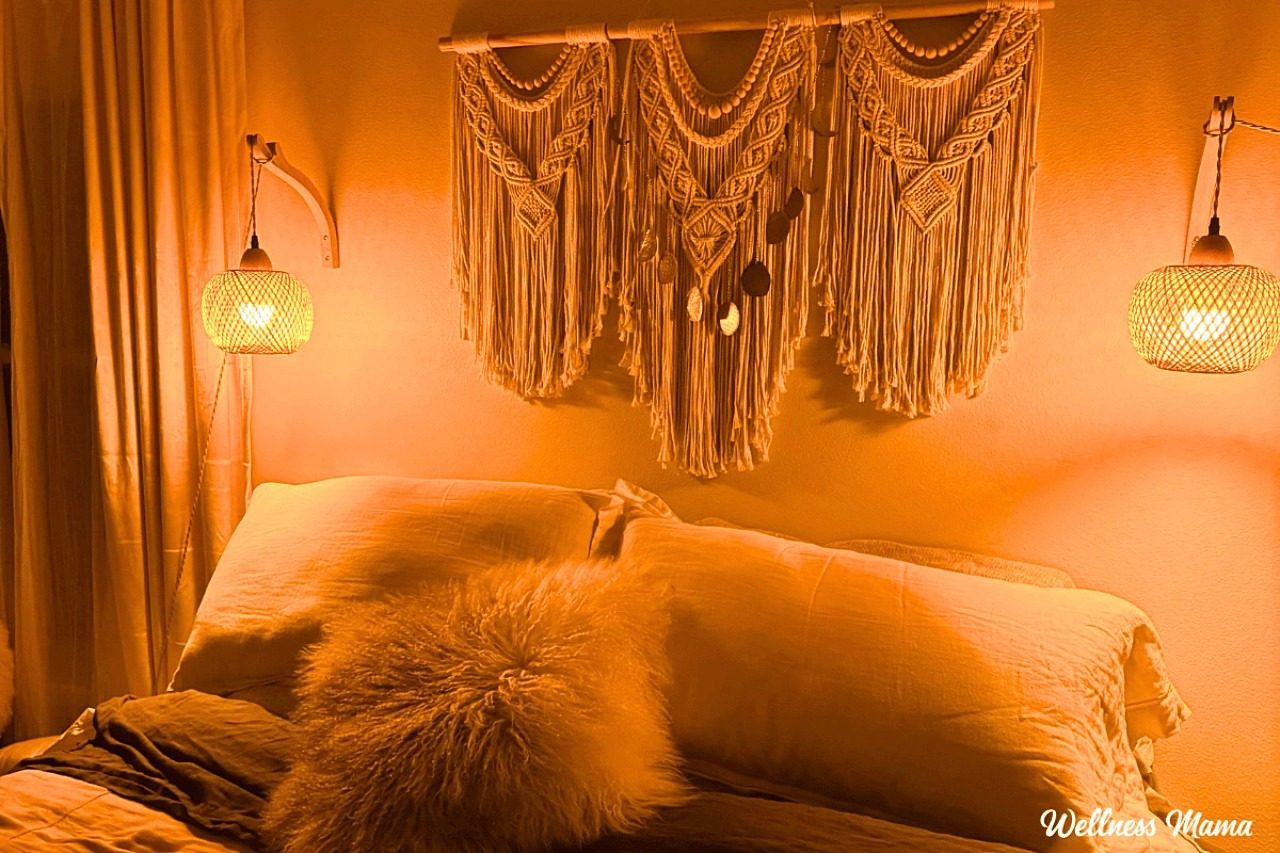
Most people don’t notice when they start winding down. But the kind of light in their environment during the hours before sleep has a measurable effect on how well that process goes. Blue-white overhead lighting tells your brain it’s noon. Warm, low-intensity light sources, such as wax pillar candles, do the opposite, which is why they’ve been part of evening rituals long before anyone fully understood the circadian system. The pairing of dim warm light and a quiet space is less about ambiance than it is about giving your nervous system the right signal at the right time.
The mechanics involve melatonin, the hormone that regulates your sleep-wake cycle. Exposure to short-wavelength, blue-spectrum light in the evening suppresses melatonin production and keeps you more alert than you want to be at 10 p.m. Warm light at lower intensities produces far less of this suppression. Your evening lighting choices are not a wellness trend. They reflect actual physiology, and the difference between a warm and cool environment at night shows up in blood panels and sleep-onset measurements, not just in how cozy a room feels.
What Blue Light Actually Does After Dark

The circadian system evolved under a relatively simple rule: sunlight signals daytime, and darkness signals night. Electric lighting changed that in the late 1800s, and modern LED technology changed it far more drastically. White LED sources emit heavily in the blue range, typically around 460 to 490 nanometers, and that wavelength is precisely what the suprachiasmatic nucleus, the brain’s master clock, is most sensitive to.
Research published in the National Library of Medicine found that warm, low-CCT lighting measurably reduces melatonin suppression compared to cooler-spectrum sources, even when lumen output is comparable. The color temperature of your evening lights matters more than the dimmer switch. Dimming a 5000K bulb to 30 percent still sends a different signal than a 2700K bulb at the same perceived brightness.
What makes this practically useful is that the fix doesn’t require new hardware. Swapping one overhead bulb for a warm-spectrum alternative and moving your evening reading to a lower lamp position can shift your body’s response noticeably. The suprachiasmatic nucleus doesn’t care about your light fixture. It cares about wavelength and intensity, and you can change both without spending much.
The Case for Lower Intensity Light in the Evening
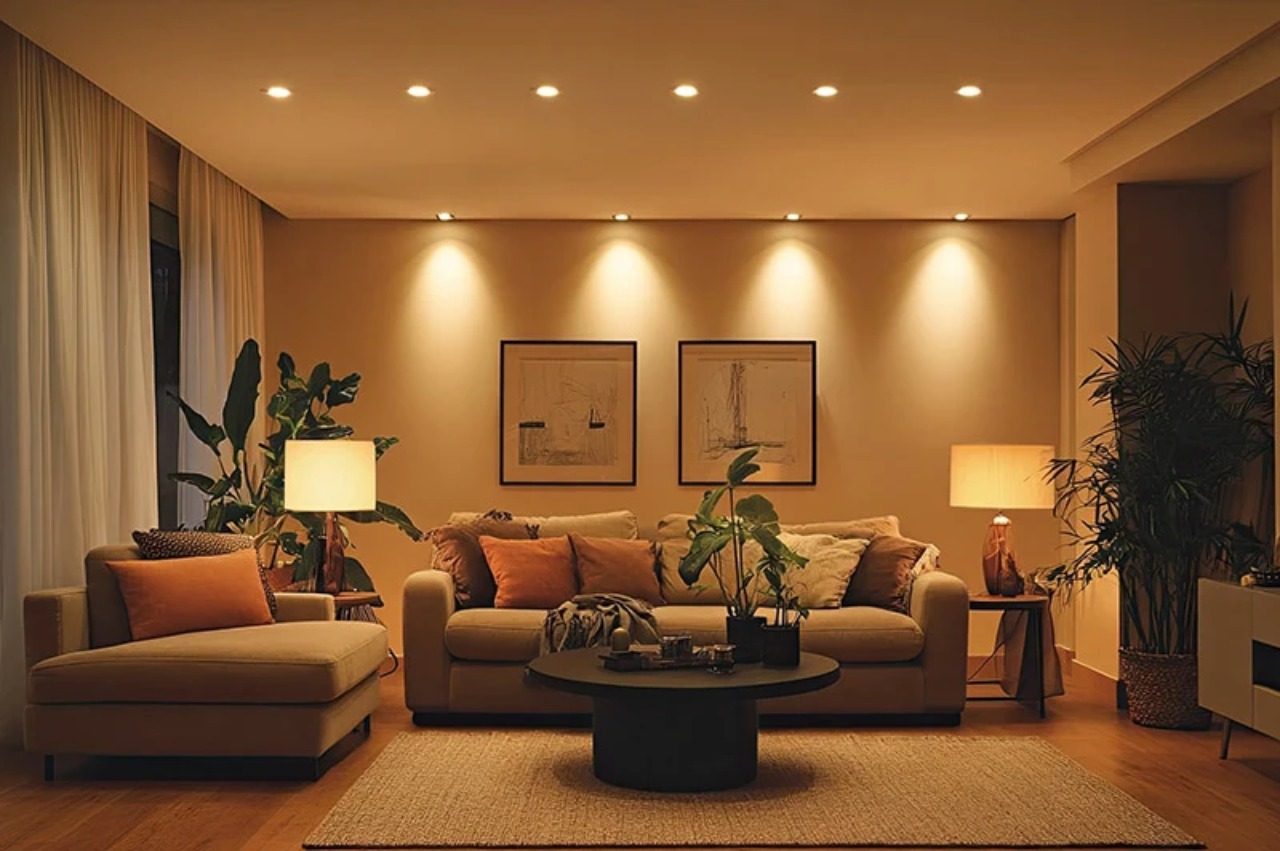
Intensity and color temperature are two separate variables, and you need to manage both. A warm-toned room flooded with light is still a problem. The body looks for cues that confirm the day is ending, and a room at 800 lux doesn’t offer those cues regardless of how warm the bulbs are rated.
Sleep research consistently points toward reducing light intensity in the final hour or two before bed. According to the CDC’s NIOSH bulletin on improving sleep, establishing a relaxing pre-sleep routine that reduces bright light exposure helps the body make the transition from wakefulness to sleep more predictably. The bulletin doesn’t specify a lux target, but the principle is consistent across sleep medicine: bright rooms delay sleep onset.
Practically, this means treating 200 lux as a ceiling for your evening environment, not a baseline. Most homes run overhead lighting between 300 and 500 lux in living areas. A single floor lamp and a small candle in the corner can bring a room down to 50 to 100 lux while still being entirely functional for reading or conversation. The adjustment is a habit, not a renovation.
Why Warm Light Sources Outperform Dimmed Overhead Lighting
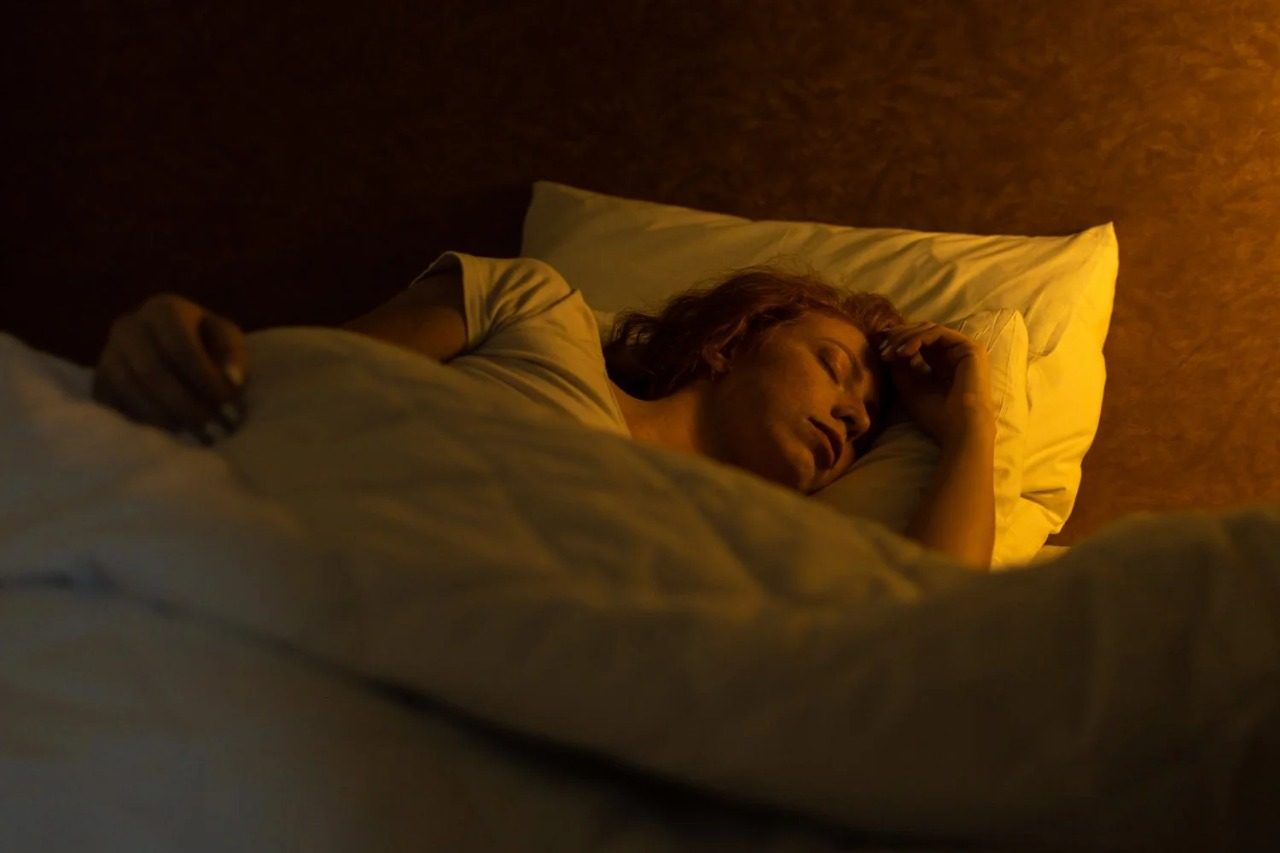
There’s a difference between turning your ceiling lights down and using a warm, low-placed light source. Overhead fixtures, even dimmed, distribute light across the room in a way that the brain still reads as daytime. The angle matters: overhead light mimics the sun, and your visual system is designed to respond to it with alertness.
A candle or low-placed warm lamp creates a different kind of environment. The light is directional, limited in its reach, and far lower in color temperature than any standard bulb. Candle flame sits at roughly 1800 Kelvin. Most warm-white LED bulbs land between 2700 and 3000K. That 900-degree gap is not trivial in terms of blue-light emission. A 1800K candle flame produces virtually zero measurable short-wavelength output.
This makes flame-based sources genuinely distinct from electric warm-whites in physiological terms, not just aesthetically. Whether that distinction is large enough to matter for sleep depends on the individual and the overall light environment, but the direction of the effect is consistent. Lower CCT means less melatonin suppression, and candles sit at the far end of that spectrum in the most favorable direction.
How Your Stress Response Connects to Evening Light

Stress and sleep are linked more tightly than most people treat them. Poor sleep raises cortisol, which makes stress harder to manage the following day. Higher baseline cortisol makes it harder to fall asleep the next night. Once you’re in this loop, fixing just one side of it is slow work.
The evening light environment is one lever that touches both sides. Bright, cool-white lighting in the hours before bed sustains a level of physiological arousal that delays the natural cortisol decline you need before sleep. Dimmer, warmer environments tend to reduce that arousal. This isn’t about mood or preference. It’s about giving the autonomic nervous system a clear environmental cue that nothing time-sensitive is happening and that downregulation is appropriate.
People who’ve made this shift often notice the effect before they have language for it. The evening feels longer and slower. Wind-down happens without effort. That’s not a psychological trick. It’s the nervous system responding to accurate environmental signals, which it was never getting from 4000K overhead lighting at 10 p.m.
Building an Evening Light Routine That Actually Works
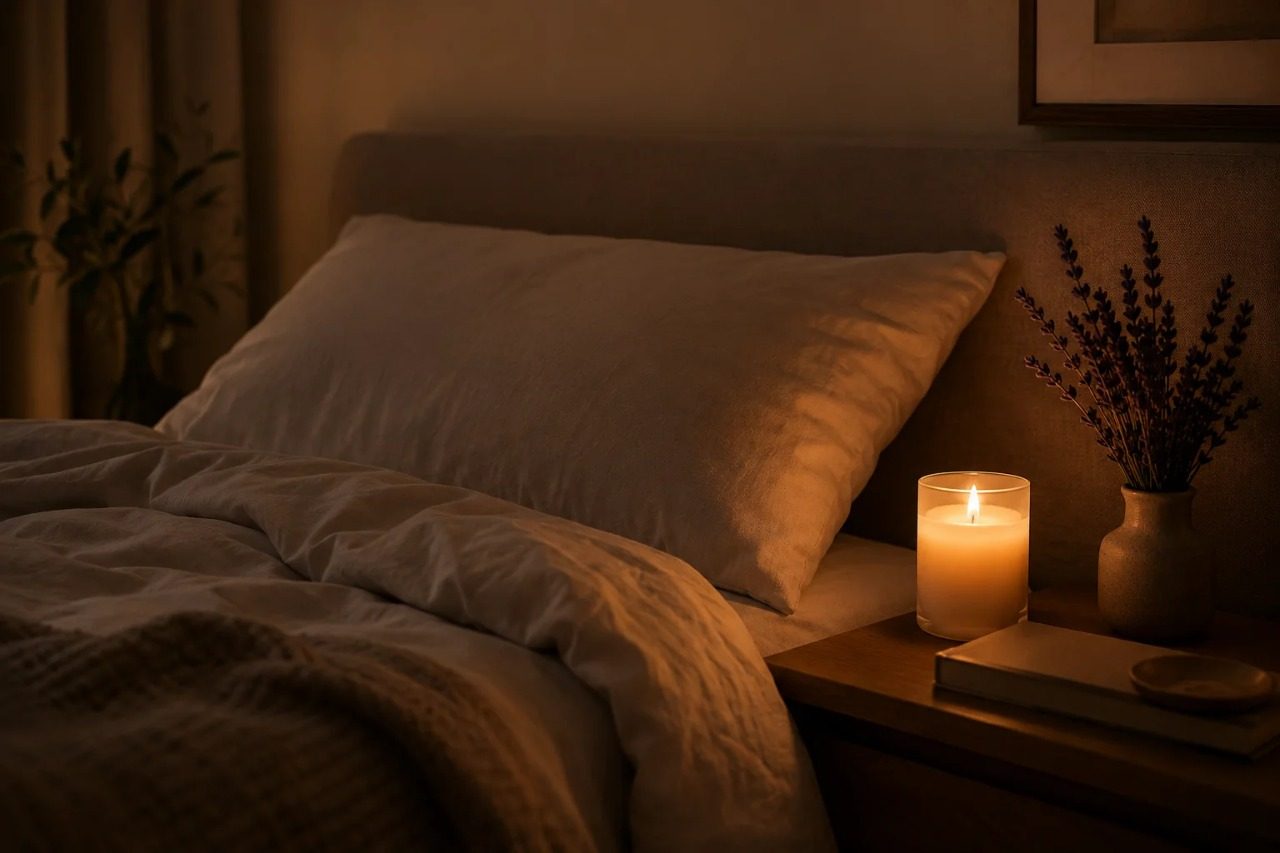
The goal is to create a transition: from daytime light conditions to something your body interprets as night. Not to make a room dark, but to stop maintaining daytime conditions until the moment you close your eyes. In practice this means switching away from overhead lighting by around 8 or 9 p.m. and relying on lower, warmer sources from that point forward.
The simpler the arrangement the more reliably it gets used. A warm lamp in one corner of the room, a small light source near wherever you spend the last half-hour before sleep, and ceiling lights off. Screen brightness should also drop in this window, though screens remain a meaningful source of blue exposure even in warm or night mode because the proximity and intensity compensate for the color shift.
One candle on a table covers several of these bases at once: low placement, very low CCT, low intensity, and a small, bounded light pool. The habit doesn’t require a new device, a subscription, or a protocol. It requires treating 9 p.m. like it should look different from 2 p.m., because for your nervous system, it genuinely does.